High-definition camera inspections show exactly what's blocking or damaging your sewer line—no excavation required. Pasco County homeowners use this technology to catch expensive problems early.
Summary:
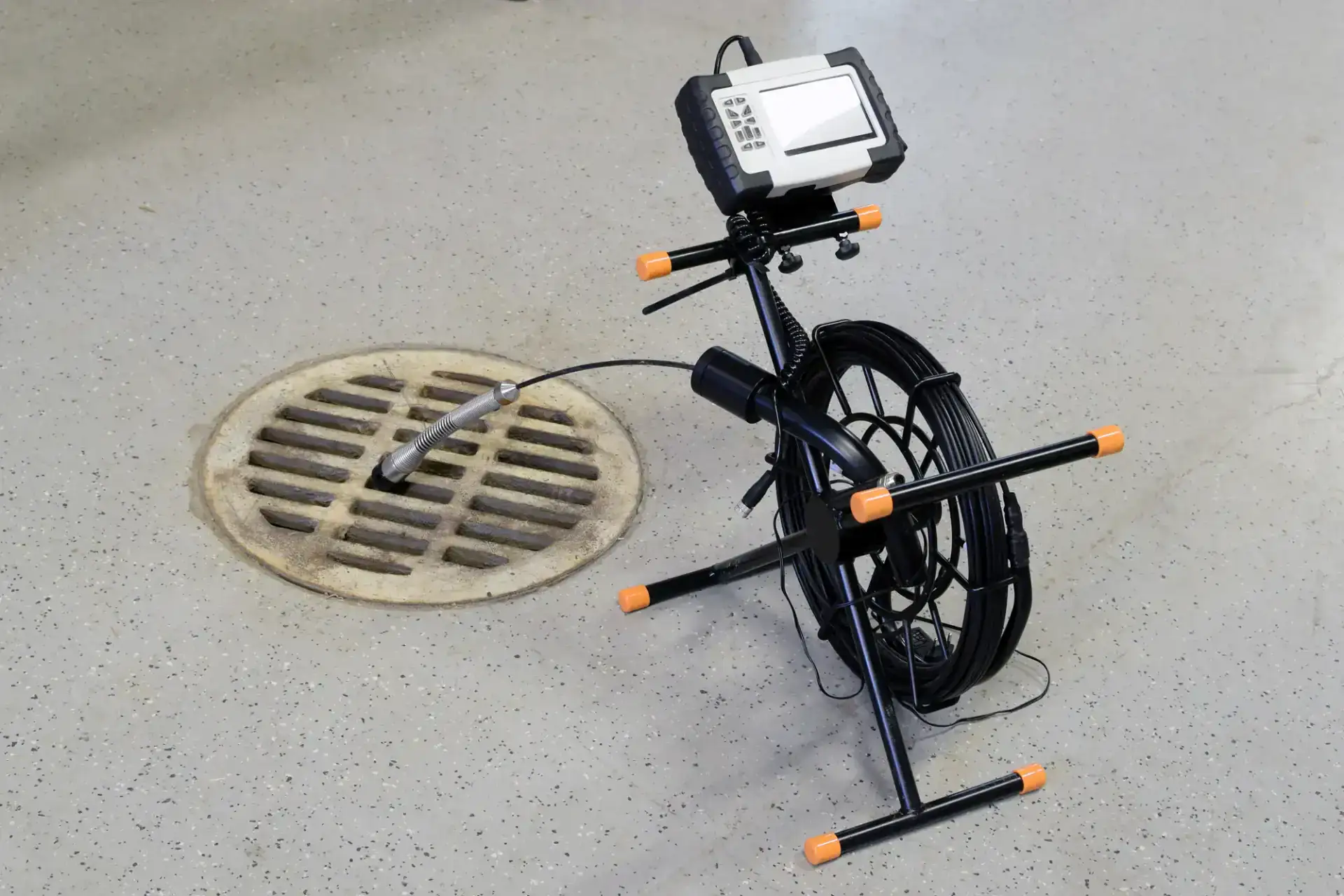
A plumbing camera inspection puts a small, waterproof HD camera inside your sewer or drain lines through access points that already exist—cleanouts, roof vents, sometimes through a temporarily removed toilet. The camera rides on a flexible cable through your pipes while sending live video to a monitor. You watch the same feed we watch.
No digging. No assumptions about what might be wrong. Just a clear view of what’s actually inside your plumbing system.
The camera has LED lights to see in dark pipes and can bend through turns in lines ranging from 2 inches to 36 inches across. As it moves through your system, it shows blockages, cracks, tree roots, corrosion, and structural damage that would stay hidden until they cause serious problems. Most inspections take about an hour. You leave with video documentation of what’s happening underground.

We start by finding the best way into your sewer line. Usually that’s through an existing cleanout—a capped pipe that gives direct access to your main sewer. If your home doesn’t have an easy cleanout, the camera can go through a roof vent or by pulling a toilet temporarily.
Once there’s access, the HD camera feeds into your pipes. The flexible cable lets it navigate bends and turns while the camera head records detailed footage. Modern equipment extends several hundred feet, meaning your entire sewer line gets inspected—from your foundation to where it connects with the city’s main line.
We watch the live feed on a screen as the camera moves. We’re looking for specific problems: tree roots breaking through pipe joints, cracks in walls, sections that have sagged from ground settling, blockages from buildup, corrosion eating through older materials, and spots where pipe sections have separated.
The camera also tracks distance. When it finds a problem, we know exactly where that problem sits—sometimes within inches. Instead of digging across your yard hoping to find a crack, we dig in one spot. This precision turns exploratory excavation into targeted repair.
You’re not told there’s a problem somewhere. You see it. The video gives you concrete proof of your pipes’ condition. That’s valuable for deciding what repairs make sense, for documenting issues if you need insurance, and for understanding what you’re actually paying to fix. We provide you with a copy of the footage for your records.
The biggest benefit is facts instead of guesses. Traditional diagnosis involves educated assumptions based on symptoms you describe. A camera inspection replaces those assumptions with evidence. You see the blockage, the crack, the roots. You make repair decisions based on what’s actually there, not on someone’s best guess.
That accuracy saves you money. Before camera technology, finding a sewer problem meant digging exploratory trenches across your yard until someone located the issue. You paid for excavation, for fixing your landscaping, potentially for repairing your driveway or patio—all before the actual plumbing repair even started. Camera inspections skip that expensive exploration. We know exactly where to dig, so you pay for one targeted repair instead of widespread excavation and restoration.
Cameras catch problems while they’re still small. A hairline crack found during an inspection might cost a few hundred dollars to patch. That same crack, left alone until it causes sewage backing up into your house, means emergency calls, water damage cleanup, possible mold issues, and a much bigger repair bill. In Pasco County, FL, where half the homes were built before 2000, this early detection matters.
The process leaves your property untouched. Your yard stays intact. Your landscaping doesn’t get disturbed. Your driveway doesn’t need repair. The camera goes in through existing access and comes out the same way. For homes with established gardens, mature trees, or expensive hardscaping, that’s a significant advantage.
If you’re buying a home, camera inspections reveal what standard home inspections miss. Typical inspections don’t include sewer lines—they’re underground and out of view. But replacing a sewer line costs $10,000 to $15,000 or more. A $350 camera inspection before you close can show whether you’re about to inherit a plumbing disaster or whether the system’s in decent shape. That information gives you negotiating leverage or, sometimes, the wisdom to walk away.
The video documentation sticks around. The footage becomes a permanent record of your plumbing’s condition. Need to file an insurance claim? You have visual proof. Planning long-term maintenance? You know which areas need attention first. Selling your home eventually? You can show buyers you’ve maintained things responsibly.
Want live answers?
Connect with a ATA's Plumbing expert for fast, friendly support.
Sewer camera inspection cost in Florida typically runs $150 to $800. Most Pasco County homeowners pay around $350 for a standard inspection. Your exact cost depends on your sewer line’s length, how easy it is to access your cleanout, and whether you bundle the inspection with other services.
That $350 might feel like money you’d rather not spend. But stack it against what you’re avoiding. Sewer line replacement in Pasco County easily hits $10,000 to $15,000. Emergency plumbing on weekends or holidays costs substantially more than scheduled service. Water damage from a sewage backup can require thousands in cleanup and restoration. An inspection that catches trouble early pays for itself multiple times over.
The value gets clearer when you think about what you’re actually buying. You’re not paying someone to peek at your pipes. You’re paying for accurate information that prevents expensive mistakes—avoiding the cost of digging in the wrong place, skipping the scenario where work starts based on a guess and the real problem turns out to be somewhere else entirely.
Recurring clogs tell you something deeper is wrong. If you’re calling for the same slow drain or backup every few months, traditional drain cleaning only addresses the current blockage. It doesn’t identify why the problem keeps returning. A camera inspection shows whether tree roots are growing into your line, whether ground settling has created a permanent low spot that traps debris, or whether decades of buildup have narrowed your pipes so much that normal use causes backups.
Slow drains affecting multiple fixtures usually point to a main sewer line problem rather than individual drain issues. A camera inspection quickly determines whether you’re dealing with a blockage in the main line, a collapsed pipe section, or root intrusion restricting flow.
Gurgling from drains or toilets suggests trapped air in your plumbing, which often happens when there’s a blockage or venting problem. Sewage smells inside your home or in your yard point to a leak or crack in your sewer line. These aren’t issues you can ignore. A camera inspection pinpoints exactly what’s causing them.
Buying a home in Pasco County built before 2000—about half the homes here—makes a camera inspection essential. Standard home inspections skip sewer lines. The age of housing stock in this area means you’re likely looking at clay pipes, cast iron, or polybutylene plumbing installed between 1978 and 1995. These materials have known failure patterns. A camera inspection reveals their current condition before you’re financially committed.
Planning a major remodel that adds bathrooms or significantly increases water use is another smart time for an inspection. Your existing sewer line needs to handle the additional demand. A camera shows whether your pipes are up to the task or whether you need upgrades before investing in renovations.
Pasco County’s conditions make regular inspections especially valuable for older homes. Mature trees—as beautiful as they are—send roots searching for water. Your sewer line is an attractive target. Clay pipes, standard in homes built before the 1980s, are particularly vulnerable to root intrusion. Florida’s humidity accelerates corrosion in metal pipes. Hard water causes mineral deposits that gradually narrow pipe interiors. Hurricane season and summer rains stress aging systems. A proactive camera inspection every few years catches these issues while they’re still manageable.
Tree root intrusion shows up in most camera inspections of older Pasco County homes. Mature landscaping means established root systems. Roots grow toward water. Your sewer line, with constant moisture, is exactly what they’re seeking. Roots enter through tiny cracks at pipe joints and then grow inside the pipe, creating massive blockages. Left alone, they can completely crush clay or cast iron pipes. A camera shows exactly where roots have invaded and how extensive the damage is, allowing for targeted treatment before you’re dealing with a collapsed pipe.
Pipe corrosion and deterioration appear clearly on camera. Florida’s high humidity and hard water speed up the breakdown of older materials like galvanized steel and cast iron. You see rust eating through walls, mineral deposits narrowing the interior, and areas where pipe material has worn away. This tells you whether spot repairs will work or whether it’s time to consider repiping before facing emergency failures.
Bellied pipes—sections that have sagged from ground settling—create low spots where waste and debris collect. These become chronic clog points because gravity works against proper drainage. A camera reveals these bellied sections and shows how severe the sagging is, explaining why you keep dealing with the same backup in the same spot.
Cracks and joint separations show on camera before they cause obvious trouble. A small crack might not be creating problems today, but Florida’s summer rains and hurricane season will find it. Joint separations, where pipe sections have pulled apart due to ground movement, let sewage leak into surrounding soil and allow dirt and debris to enter your line. Catching these early means repairing on your schedule rather than during an emergency.
Blockages from grease, debris, and mineral buildup are immediately visible on camera. You see exactly what’s clogging your line—hardened grease, accumulated debris, toilet paper caught on a rough pipe section, or mineral deposits built up over decades. This determines the best cleaning method and whether the blockage signals a larger structural issue.
The inspection also reveals overall pipe condition and material. Buying an older home? You might discover polybutylene pipes—marketed as “the pipe of the future” between 1978 and 1995 but now known for premature failure. Or you might find previous repairs done incorrectly, with mismatched materials or poor connections now causing problems. This knowledge helps you plan and budget for your home’s maintenance.
Customer Testimonials
Camera line inspections turn underground mysteries into visible, solvable problems. For Pasco County, FL homeowners dealing with aging infrastructure, mature trees, and Florida’s challenging climate, this technology isn’t extra—it’s one of the most practical diagnostic tools available.
The cost is modest compared to what you’re preventing. A few hundred dollars for an inspection can save thousands in unnecessary excavation, emergency repairs, and property damage. More importantly, it gives you accurate information for confident decisions about your plumbing instead of relying on guesswork.
Whether you’re troubleshooting recurring problems, buying an older home, or want to know what’s happening beneath your property, a camera inspection provides the clarity you need. We’ve been providing honest, transparent camera line inspections to Pasco County homeowners since 2013.
Article details:
Continue learning: