Your garbage disposal handles daily kitchen waste, but jams, leaks, and clogs happen. Learn what causes problems and how to keep yours running longer.
Summary:
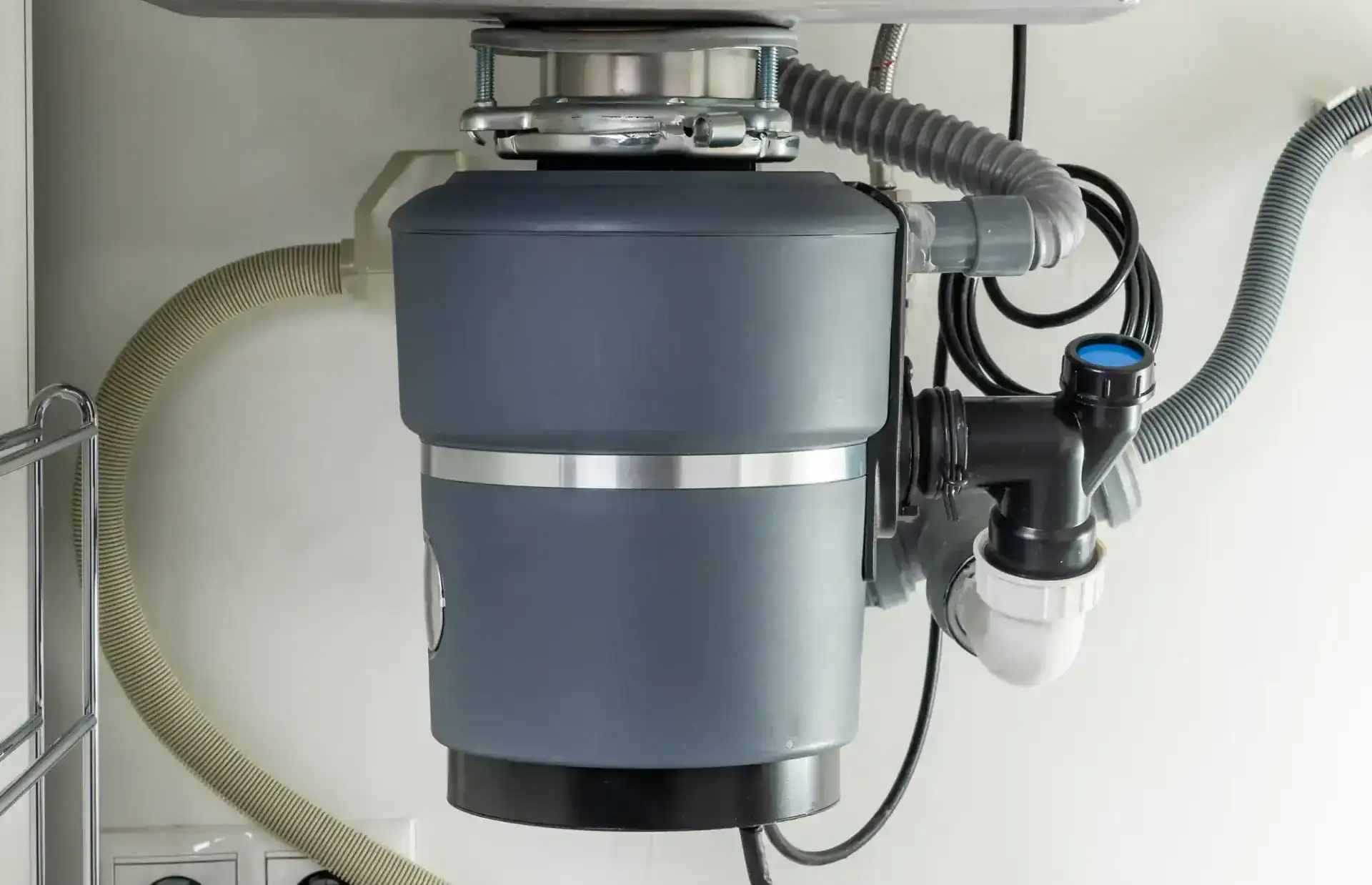
Your disposal isn’t the complex machine most people imagine. Under that rubber splash guard sits a grinding chamber where food hits a spinning plate with small impellers attached. These impellers throw waste against a stationary shredder ring that breaks everything into tiny particles.
Cold water flushes those particles through the lower chamber and into your drain pipes. The entire process takes seconds when everything works right. But that simplicity also means there aren’t many parts to fail—which is why most problems come from what goes into the disposal, not the disposal itself.
Understanding this basic function explains why certain foods cause jams while others pass through easily. It also shows why running water during operation isn’t optional.

The biggest disposal killer isn’t age or heavy use. It’s the wrong stuff going down the drain.
Fibrous foods wrap around the impellers like hair around a vacuum roller. Celery strings, onion skins, corn husks, and artichoke leaves create tangles that stop the spinning plate cold. You might hear humming as the motor tries to turn, but nothing grinds.
Starchy foods like pasta, rice, and potato peels expand when they get wet. They turn into a paste that coats your pipes and creates slow-draining clogs that have nothing to do with the disposal itself. By the time you notice the backup, that paste has been building for weeks.
Grease and cooking oil seem harmless when they’re liquid. Pour them down while hot and they flow right through. But once they cool in your pipes, they solidify into a coating that catches every food particle that follows. That’s how you end up with a clog three feet down the line that no amount of grinding will fix.
Hard items like bones, fruit pits, and coffee grounds don’t break down the way softer foods do. Chicken bones might eventually grind into grit, but that grit settles in your pipes. Coffee grounds pack together like wet sand. Both create blockages that require professional drain cleaning to remove.
Eggshells sit in a gray area. Some plumbers say the membrane inside sticks to pipes. Others argue the shells themselves create granular buildup. Either way, they’re not worth the risk when your trash can sits two feet away.
The disposal can handle soft food scraps, small vegetable pieces, and citrus peels. Everything else either jams the unit or clogs your pipes downstream. That’s not a design flaw—it’s just physics.
Running cold water isn’t just a suggestion. It’s how the disposal actually works.
Cold water keeps fats and oils in solid form while they’re being ground. That lets the impellers break grease into small pieces that wash through your pipes before they can coat the walls. Hot water melts those same fats into liquid that flows past the grinding chamber, then re-solidifies in your drain lines where you can’t see it building up.
The temperature also affects your disposal’s motor. These units generate heat during operation, and cold water helps dissipate that heat before it damages internal components. Run hot water instead and you’re asking the motor to work harder while staying cooler—which shortens its lifespan.
You need water running before you turn on the disposal, during the entire grinding process, and for at least 15 seconds after you shut it off. That final flush clears particles from the grinding chamber and pushes everything far enough down the pipes that it won’t settle and create clogs.
Most people stop the water as soon as the grinding sounds finish. That leaves food particles sitting in the chamber where they’ll start decomposing and creating odors. It also leaves debris in the upper section of your drain pipes where it catches on any rough spots or existing buildup.
The amount of water matters too. A trickle won’t create enough flow to carry particles away. You want a steady stream—not full blast, but strong enough that you can see it moving food through the drain opening.
This is one maintenance habit that costs nothing and prevents most of the service calls we make for “broken” disposals that just needed proper water flow.
Want live answers?
Connect with a A.T.A’s Plumbing expert for fast, friendly support.
That humming sound means something’s stuck between the impeller plate and the grinding ring. The motor’s running, but the plate can’t spin. This happens when hard objects like silverware fall in, or when fibrous foods wrap around the mechanism.
Complete silence when you flip the switch points to electrical issues. Either the unit’s unplugged, a circuit breaker tripped, or the built-in overload protector popped. Sometimes it’s as simple as someone bumping the plug under the sink.
Slow drainage tells you the problem isn’t in the disposal at all. The grinding chamber is working fine, but something downstream is restricting water flow. This usually means buildup in the pipes from grease, food particles, or both.
Never stick your hand into a garbage disposal. Not even when it’s off. Not even when you’re sure the power’s disconnected. Use tools instead.
Start by turning off the power at the circuit breaker, not just the wall switch. Switches can fail or get bumped. The breaker guarantees no electricity reaches the unit. Then shine a flashlight down the drain to see what’s causing the jam. If you can see the object, use long pliers or tongs to pull it out.
Most disposals have a hex-shaped hole on the bottom of the unit. The disposal should have come with a small Allen wrench that fits this hole. Insert the wrench and turn it back and forth—you’re manually rotating the impeller plate to break up whatever’s jamming it. You’ll feel resistance at first, then the wrench will start moving freely once the jam clears.
Some units have a red reset button on the bottom instead of a hex hole. This overload protector pops out when the motor works too hard. Press it back in after you’ve cleared the jam. If it pops out again immediately, something’s still stuck or the motor has a bigger problem.
Once you’ve cleared the jam, restore power at the breaker and run cold water. Turn on the disposal and let it run for 30 seconds to make sure everything moves freely. Listen for unusual grinding or rattling that might indicate damage to the impellers or grinding ring.
If the disposal still hums without grinding after you’ve tried these steps, the jam might be deeper in the unit than you can reach. That’s when you need someone with the tools to disassemble the grinding chamber and check for damage.
In Pasco County’s older homes, disposals often jam because the units are undersized for modern usage patterns. A 1990s-era third-horsepower disposal can’t handle the same volume as newer, more powerful models. Sometimes the best fix is an upgrade.
Disposals last 8 to 15 years with proper care. Once yours passes the ten-year mark, repair costs start competing with replacement costs.
Leaks from the bottom of the unit mean internal seals have failed. You can’t replace these seals without completely disassembling the disposal, and the labor cost for that work usually exceeds the price of a new unit. Leaks from the mounting assembly or drain connections can be fixed by tightening bolts or replacing gaskets, but leaks from the disposal body itself signal the end.
Frequent resets tell you the motor’s wearing out. The overload protector is doing its job by shutting down before the motor burns out completely, but if you’re resetting the unit every few uses, you’re on borrowed time. Motors don’t heal themselves—they just fail more often until they stop working entirely.
Persistent odors despite thorough cleaning mean food is getting trapped in areas you can’t reach. This happens when the grinding ring develops pits or the impellers bend enough to leave gaps. Food sits in these spaces decomposing instead of getting flushed away. You can mask the smell temporarily, but the underlying problem requires replacing components that cost more than a new disposal.
Slow grinding that never improves indicates dull or damaged impellers. Some people suggest grinding ice to sharpen the blades, but disposals don’t have blades—they have blunt impellers that rely on centrifugal force. Ice might clear away buildup, but it won’t restore lost grinding power. Once the impellers wear down, performance only gets worse.
Multiple repairs in a short timeframe mean the disposal is failing systemically. Fix a leak and then the motor goes. Replace the motor and then the mounting assembly cracks. At some point you’re throwing good money after bad.
Replacement makes more sense when your disposal is over ten years old, requires its second or third repair, or when the repair cost exceeds half the price of a new unit. Modern disposals are more powerful, quieter, and more efficient than older models. You’re not just fixing a problem—you’re upgrading your kitchen’s functionality.
For Pasco County homeowners dealing with hard water and aging plumbing systems, a new disposal often solves problems the old unit couldn’t handle. The investment pays off in fewer clogs, better grinding performance, and years without service calls.
Customer Testimonials
Most disposal problems are preventable. Run cold water every time. Keep fibrous foods and grease out of the drain. Don’t overload the unit with large amounts of waste at once. These simple habits extend the life of your disposal and prevent most common failures.
When problems do happen, knowing what you can fix yourself versus what needs professional attention saves time and money. Jams and resets you can usually handle. Leaks, electrical issues, and persistent performance problems require someone with the right tools and experience.
If you’re dealing with a disposal that won’t cooperate, or if you’re ready to upgrade to a more powerful unit, we’ve been solving these exact problems in Pasco County, FL since 2013. We understand how local water conditions and aging home systems affect your plumbing, and we’ll give you honest advice about whether repair or replacement makes more sense for your situation.
Article details:
Continue learning: