Tired of the same drain clogging every few months? Learn why snaking only offers temporary relief and discover professional solutions that actually last.

Summary:
Drain clogs don’t happen overnight. They develop gradually as grease, soap scum, hair, and mineral deposits accumulate inside your pipes. In Pasco County, this process happens faster than in most other places.
Florida’s hard water contains high mineral content that leaves scale buildup on pipe walls. Add in the humidity, frequent storms, and aging infrastructure from the 1990s construction boom, and you’ve got conditions that put constant stress on your plumbing. Many homes in areas like New Port Richey, Wesley Chapel, and Land O’ Lakes still have original cast iron pipes that are reaching the end of their 40 to 60 year lifespan.
Kitchen drains face grease and food particles that cool and solidify inside pipes. Bathroom drains collect hair and soap that bind together into stubborn blockages. Tree roots seek out moisture in sewer lines, penetrating through small cracks in older clay or cast iron pipes. These aren’t separate problems—they’re all symptoms of pipes that need more than a quick snake job to unclog a drain properly.
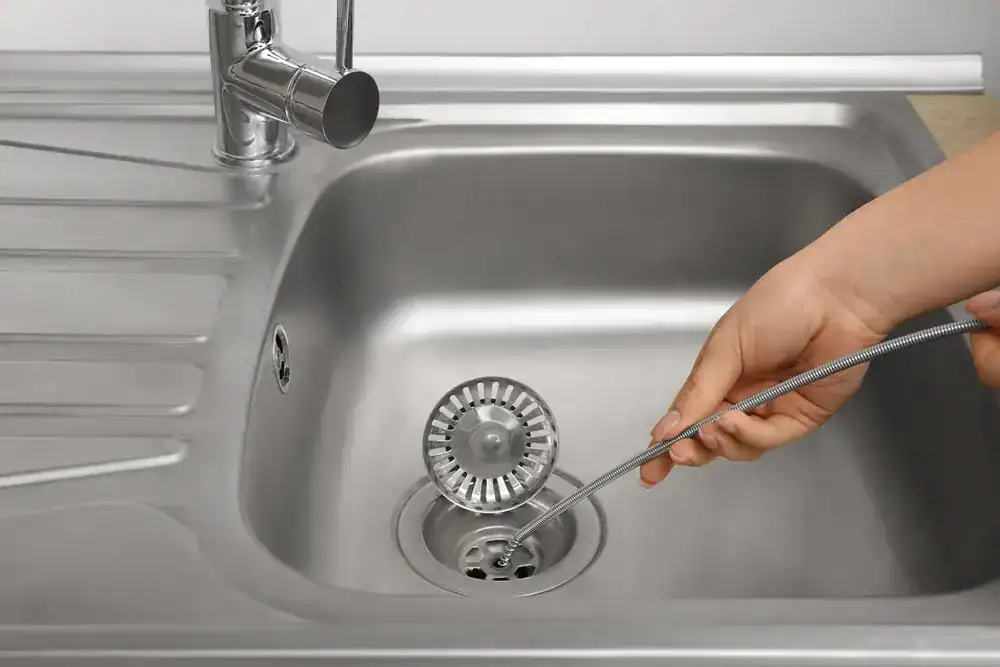
Here’s what most plumbers won’t tell you upfront. When they snake your drain, they’re pushing a metal cable through the clog to create a hole for water to flow. That hole might be an inch wide in a four-inch pipe. The rest of the buildup stays exactly where it is, coating your pipe walls.
Within weeks or months, that remaining buildup catches new debris flowing through. Hair sticks to the grease. Soap scum adds another layer. Before long, you’re dealing with the same problem because the real issue never got addressed. The snake punches through, but it doesn’t clean.
This isn’t a failure of the tool or the plumber. It’s just what snaking does. It’s designed for quick relief, not thorough cleaning. For a minor clog near the surface, that might be enough. But for chronic problems or deep buildup, you’re paying for the same temporary fix over and over.
The cost adds up fast. Emergency drain clearing runs $150 to $300 each time. If you’re calling someone every few months, you’re looking at $600 to $1,200 per year just treating symptoms. That’s money spent without solving anything, and it doesn’t include the frustration of dealing with slow drains between service calls.
In Pasco County homes with aging plumbing, this cycle often continues until the buildup gets so severe that water barely moves through the pipes at all. At that point, you’re facing either a complete pipe replacement or a more aggressive cleaning method that should have been used from the start.
The other problem with repeated snaking is what it can do to your pipes over time. The tip of a snake can scratch pipe walls and damage protective coatings. In older pipes already weakened by corrosion, this can lead to cracks and leaks that create much bigger problems down the road.
Pasco County’s water averages 216 parts per million of dissolved minerals. That’s considered extremely hard water, and it means every gallon flowing through your pipes leaves behind calcium and magnesium deposits. Over months and years, those deposits narrow your pipe diameter, reduce water flow, and make clogs more likely.
The heavily chlorinated water supply adds another layer of stress. Chlorine corrodes pipes from the inside, especially in older homes where the original plumbing wasn’t designed to handle today’s treatment levels. This internal corrosion creates rough surfaces inside pipes where debris catches more easily.
Florida’s humidity accelerates everything. Moisture in the air means moisture in your walls, floors, and crawl spaces where pipes run. That humidity promotes rust in metal pipes and encourages organic growth in drain lines. Combined with frequent summer storms that can flood sewage systems, your drains work harder here than in most other states.
Many homes built during the 1990s construction boom are now hitting the age where these factors converge. Water heaters fail after 8 to 12 years because hard water destroys heating elements. Garbage disposals struggle with humidity and mineral buildup. Drain lines develop problems from ground settling, root intrusion, or simple age-related deterioration.
This isn’t about scaring you into unnecessary work. It’s about understanding why the same drain keeps clogging even though you’ve had it “fixed” multiple times. The solution that works in Minnesota or Arizona might not cut it here. Florida’s conditions require methods that actually remove the buildup instead of just pushing through it.
Tree roots are particularly aggressive in this environment. They’re drawn to the moisture in sewer lines, and once they find a small crack or joint, they grow inside the pipe. In older homes with clay or cast iron sewer lines, root intrusion is one of the most common causes of recurring clogs. A snake might cut through roots temporarily, but they’ll grow back unless you remove them completely.
The combination of hard water scale, chlorine corrosion, humidity damage, and root intrusion means Pasco County drains need professional attention more often than in other areas. Recognizing this helps you make better decisions about which solution will actually work for your situation and help you prevent drain clogs long-term.
Want live answers?
Connect with a A.T.A’s Plumbing expert for fast, friendly support.
Real drain clog solutions address the root cause, not just the symptom. That means removing the years of buildup coating your pipe walls, not just poking a hole through the latest blockage. Two methods stand out for their effectiveness in Pasco County’s challenging conditions.
Hydro jetting uses high-pressure water streams—typically 3,000 to 4,000 PSI—to completely scour the inside of your pipes. It removes grease, mineral deposits, tree roots, and decades of accumulated grime. The water pressure is strong enough to cut through concrete, making it extremely effective for the toughest blockages.
Camera line inspections use waterproof video cameras to show exactly what’s happening inside your pipes before any work begins. This eliminates guesswork and prevents unnecessary repairs. You see the same footage we see, so you know you’re paying for work that actually needs to be done.
Think of hydro jetting as giving your pipes a complete renovation without the demolition. A specialized nozzle attached to a high-pressure hose feeds into your drain line. Water jets spray in multiple directions—forward jets bore through obstructions while rear jets scour the walls and drive the hose ahead.
The process removes everything. Grease that’s been building up for years gets blasted away. Mineral scale from hard water dissolves under the pressure. Tree roots that have invaded your sewer line get cut down to the pipe walls. Soap scum, hair clogs, and organic matter all wash out completely.
For Pasco County homes with aging plumbing systems, hydro jetting can often restore pipes to near-original capacity. That means water flows like it did when the house was new, and you avoid the cost of replacing pipes that still have useful life left in them. The process is safe for most pipe materials when done by professionals who know how to adjust pressure for different conditions.
The results last significantly longer than snaking. Because hydro jetting removes the buildup instead of just creating a path through it, your drains can stay clear for 18 to 24 months or longer. That’s versus the few weeks or months you typically get from snaking. The upfront cost is higher—usually $300 to $600 depending on the scope of work—but it addresses the root cause instead of treating symptoms.
This method works especially well for kitchen drains with heavy grease buildup, homes with hard water mineral scaling, and properties with root intrusion in older sewer lines. It’s also the best option when you’ve been dealing with recurring clogs despite repeated snaking attempts.
One important note: hydro jetting requires professional equipment and expertise. The water pressure is powerful enough to damage weakened or deteriorated pipes if used incorrectly. That’s why camera inspection comes first—to assess pipe condition and make sure hydro jetting is the right approach for your specific situation.
In Florida’s humid environment where organic growth happens quickly, hydro jetting’s thorough cleaning also helps prevent future problems. By removing all organic matter from pipe walls, there’s nothing for bacteria or mold to feed on. Your drains stay cleaner longer, and you avoid the foul odors that often come with partial blockages.
Before any serious drain work begins, you need to see what’s actually wrong. Camera line inspections use a flexible rod with a high-definition waterproof camera attached to the tip. The camera feeds through your drain line while transmitting real-time video to a monitor above ground.
This shows exactly what’s causing your problem. You might see tree roots growing through a cracked section of pipe. You might see decades of grease coating the walls. You might see mineral scale that’s narrowed a four-inch pipe down to two inches. Or you might see that the pipe has collapsed or separated at a joint. Each of these problems requires a different solution, and you can’t know which one you’re dealing with without looking inside.
The camera inspection eliminates guesswork. No more paying for exploratory work or unnecessary repairs. No more wondering if we’re telling you the truth about what needs to be done. You see the same footage we see, and you can make informed decisions about which repairs make sense for your situation and budget.
For Pasco County’s aging homes, camera inspections often reveal problems that homeowners didn’t know existed. A small crack that’s letting tree roots in. A section of cast iron pipe that’s corroded through. A belly in the line where waste collects and creates recurring clogs. These issues won’t fix themselves, and snaking won’t help. But knowing about them means you can address them before they turn into emergencies.
The inspection also documents your pipe condition for insurance purposes or future reference. If you’re buying a home in Holiday, Zephyrhills, or anywhere in Pasco County, a sewer camera inspection before closing can reveal problems that might cost thousands to fix later. If you’re selling, it gives buyers confidence that your plumbing system is in good shape.
Camera technology has advanced significantly in recent years. Modern systems include locating devices that pinpoint exactly where problems exist underground. This means if excavation or spot repair is needed, we know precisely where to dig instead of tearing up your entire yard. The footage can be saved and reviewed, giving you a permanent record of your pipe condition.
In practice, camera inspection and hydro jetting work together. The camera shows what needs to be cleaned and confirms that pipes are strong enough to handle high-pressure water. After hydro jetting, the camera can verify that the cleaning was thorough and that water flows freely through the entire line. This combination gives you the most complete solution available for chronic drain problems.
Customer Testimonials
Recurring drain clogs aren’t something you have to live with. The key is choosing solutions that address what’s actually wrong instead of just treating symptoms. For most Pasco County homes dealing with chronic problems, that means professional drain cleaning with hydro jetting to remove years of buildup and camera inspection to confirm the work was done right.
The upfront cost is higher than snaking, but the results last years instead of weeks. You avoid repeated service calls, prevent water damage, and keep your plumbing system functioning the way it should. When you factor in the money you’re currently spending on temporary fixes, professional drain cleaning often pays for itself within the first year.
If you’re tired of the same drain clogging every few months, it’s time for a different approach. We’ve been solving these exact problems in Pasco County, FL since 2013. We start with camera inspection to show you what’s really going on, explain your options in plain English, and provide upfront pricing before any work begins.
Article details:
Continue learning: