Learn how to identify and fix common garbage disposal issues, plus when to call ATA's Plumbing for professional repairs in Pasco County.

Summary:
Your garbage disposal works harder than most appliances in your home. It grinds, chops, and flushes food waste multiple times daily, often for decades. In Pasco County’s older homes, these kitchen sink disposal units face additional stress from hard water mineral buildup and aging plumbing systems that weren’t designed for today’s usage patterns.
The reality is that most garbage disposal repair needs aren’t random breakdowns. They develop over time as small issues compound into bigger headaches. Understanding why these problems happen helps you catch them early, before you’re dealing with water damage or emergency disposal installation.
When your garbage disposal hums but won’t grind, something is jammed inside the unit. This is one of the most common disposal problems we see in Pasco County, and it usually happens when hard objects like bones, fruit pits, or silverware get lodged in the grinding mechanism.
The humming sound means your motor is trying to work, but the blades can’t turn. Don’t keep flipping the switch—this can burn out the motor and turn a simple garbage disposal repair into an expensive replacement.
First, turn off the power at the circuit breaker. Never reach into the disposal with your hands. Look for the hex-shaped hole at the bottom of the unit and use the Allen wrench that came with your disposal to manually turn the blades. Work it back and forth until you feel the obstruction break free.
If you don’t have the wrench, you can try using a wooden spoon handle to gently push against one of the blades from above. Once the jam clears, restore power and test the unit with cold water running.
Sometimes the jam is deeper in the system or caused by something that’s not easily dislodged. If the humming continues after trying these steps, the problem likely requires professional garbage disposal repair to avoid damaging the motor or grinding assembly.
Disposal leaking issues can cause serious water damage to your cabinets and flooring, especially in Florida’s humid climate where moisture problems escalate quickly. Most leaks develop gradually, so catching them early saves you from costly repairs down the road.
Leaks typically occur in four main areas. The sink flange connection at the top can loosen over time from normal vibration. The dishwasher hose connection may work loose or develop cracks. The drainpipe connections can wear out, especially in older homes with galvanized plumbing. Finally, the disposal unit itself can develop leaks if internal seals fail.
To identify the source, dry the area completely and run the garbage disposal while watching for drips. Mark where you see water appearing. For loose connections, you might be able to tighten the bolts or replace worn gaskets yourself.
However, leaks from the disposal body usually indicate internal damage that requires professional garbage disposal repair or complete disposal installation. These aren’t DIY fixes—the unit needs to be properly disconnected, diagnosed, and either repaired or replaced with new seals and gaskets.
Don’t ignore small leaks thinking they’ll get better on their own. In Pasco County’s older homes, small plumbing problems often reveal bigger issues with aging systems that need professional assessment.
Want live answers?
Connect with a ATA's Plumbing expert for fast, friendly support.
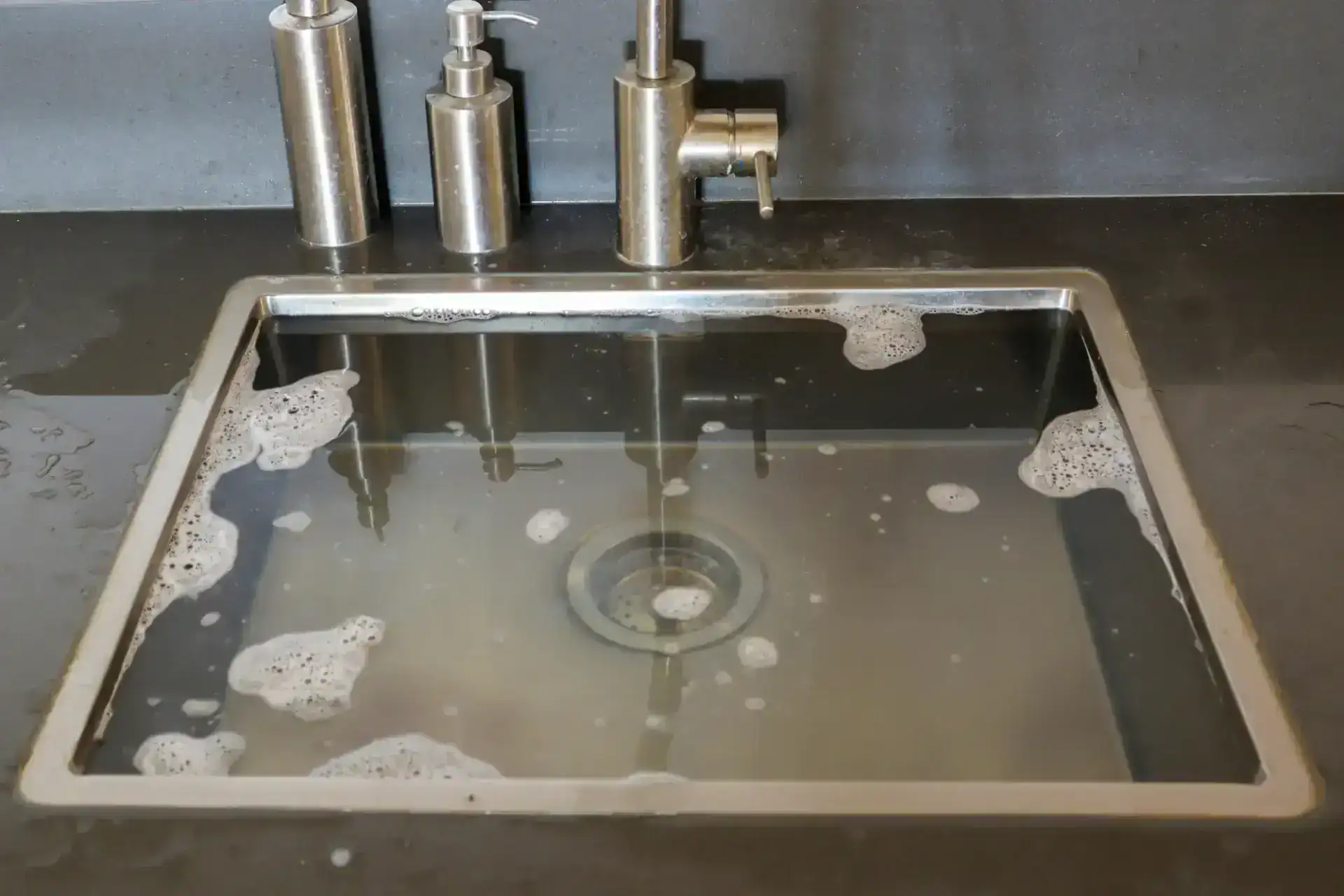
Slow drainage or complete clogs are frustrating problems that often indicate issues beyond just the disposal unit itself. In many cases, the problem is actually in your drain pipes, where food particles and grease have built up over time.
This is especially common in older Pasco County homes where original plumbing systems struggle with modern usage patterns. What starts as slightly slow drainage from your kitchen sink disposal can quickly become a complete backup that affects your entire kitchen sink.
Before assuming your garbage disposal needs replacement, understand that most “disposal clogged” situations are actually drain clogs that happen after the grinding chamber. The disposal itself rarely gets completely blocked—the problem is usually in the P-trap or drain lines below.
Start by turning off the disposal and checking if water drains at all when you remove the rubber splash guard. If water sits in the grinding chamber, the clog is likely in the drain pipes, not the disposal mechanism itself.
Never use chemical drain cleaners in a garbage disposal. These harsh chemicals can corrode the metal components and create dangerous conditions when the disposal is turned back on. They also rarely work on the types of clogs that affect kitchen sink disposal systems.
Instead, try disconnecting the P-trap under the sink to manually remove buildup. This requires basic tools and some patience, but it’s often the most effective solution for stubborn clogs. You’ll likely find a combination of food particles, grease, and debris that’s been accumulating over time.
If the disposal clogged condition persists after cleaning the trap, the problem may be deeper in your drain lines. This is where professional drain cleaning equipment becomes necessary to clear blockages without damaging your plumbing system.
Prevention is always easier than garbage disposal repair, especially when dealing with drainage issues. The key is understanding what should and shouldn’t go down your disposal, and developing habits that keep your drain lines clear.
Always run cold water before, during, and after using your garbage disposal. Cold water keeps grease and fats solid so they can be chopped up and flushed away, rather than coating your pipes as liquid and hardening later. Run the water for at least 15 seconds after turning off the disposal to ensure all particles are completely flushed.
Avoid putting fibrous materials like celery stalks, corn husks, or onion skins down the disposal. These can wrap around the blades and create clogs. Similarly, starchy foods like potato peels and pasta can form paste-like substances that stick to pipe walls.
Grease, oil, and fat should never go down any drain, but this is especially important with kitchen sink disposal systems. Even small amounts can accumulate over time and create serious blockages in your drain system.
Regular cleaning helps prevent buildup before it becomes a problem. Drop a few ice cubes and citrus peels into the disposal monthly to help clean the blades and freshen the unit. The ice helps scrape away buildup while the citrus oils naturally deodorize.
If you’re in an older Pasco County home, consider having your drain lines professionally cleaned annually. This preventive maintenance catches problems before they become emergencies and extends the life of both your disposal and your plumbing system.
Customer Testimonials
While some disposal problems can be handled with basic troubleshooting, many issues require professional diagnosis and repair. This is especially true in Pasco County’s older homes, where garbage disposal problems often reveal underlying plumbing issues that need expert attention.
Persistent jams, recurring leaks, or drainage problems that return after cleaning usually indicate deeper problems that DIY fixes won’t solve. Professional garbage disposal repair ensures the job is done safely and correctly the first time, preventing costly damage to your kitchen and plumbing system.
When you’re ready for reliable disposal repair or garbage disposal installation from a team that understands Pasco County’s unique plumbing challenges, we at ATA’s Plumbing have been solving these problems since 2013. We provide honest assessments, upfront pricing, and the expertise to get your kitchen back to normal quickly.
Continue learning: