Learn which plumbing repairs hit Pasco County homes most often and what you can do to prepare before small issues become expensive emergencies in your aging home.
Summary:
That constant drip from your kitchen or bathroom faucet isn’t just annoying. It’s wasting water, costing you money, and slowly damaging your sink and the pipes underneath. A single leaky faucet can waste over 3,000 gallons annually, and in Pasco County’s hard water environment, the problem often gets worse faster than you’d expect. Most leaks start with worn-out washers, damaged O-rings, or corroded valve seats inside the faucet. The minerals in Florida’s water accelerate this wear, especially if you’ve had the same faucet for years. What begins as an occasional drip turns into a steady stream that won’t stop no matter how tight you turn the handle.
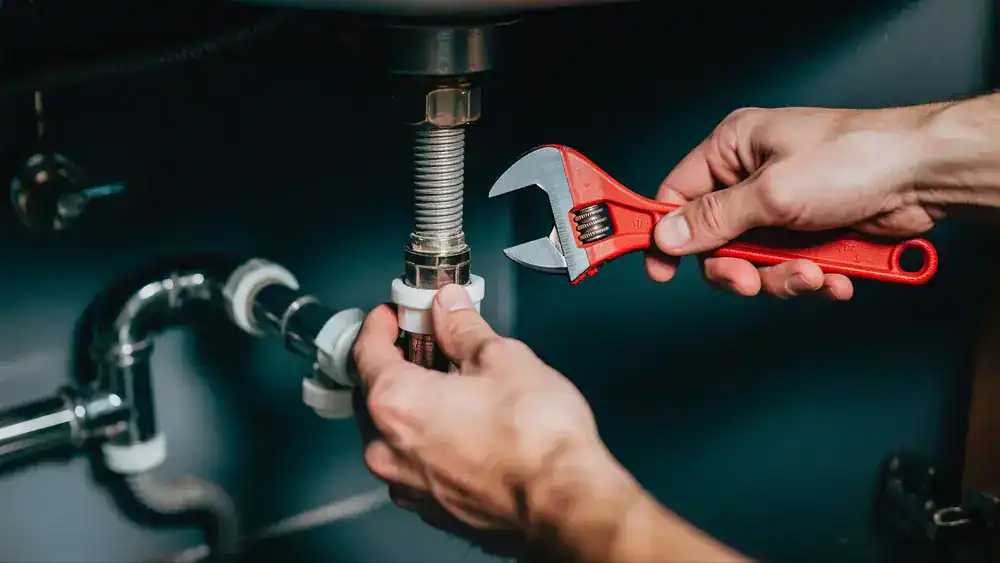
Faucet leaks happen when the internal parts that control water flow break down. Every time you turn a faucet on and off, small components like washers and O-rings compress and release. After thousands of cycles, these parts wear out. The rubber gets hard and brittle. The seals no longer sit flush. Water finds its way through gaps that shouldn’t exist.
In Pasco County, hard water speeds up this process. The minerals in your water leave deposits on these moving parts, creating rough surfaces that wear through rubber faster. Corrosion builds up on metal components, especially in older faucets with brass or copper internals. Temperature changes don’t help either. Florida’s humidity and the hot water running through your pipes cause expansion and contraction that stress these connections.
Sometimes the problem isn’t the parts themselves but how they were installed. A faucet that wasn’t seated properly from the start will leak sooner. Cross-threaded connections or missing washers during installation create weak points. If you’ve noticed a leak shortly after having a faucet replaced or repaired, installation issues might be the real culprit.
The location of the leak tells you what’s failing. Drips from the spout usually mean the internal seals or cartridge need replacing. Water pooling around the base of the faucet points to O-ring problems or a loose connection. If you see moisture under the sink, the supply line connections might be the issue, not the faucet itself. Understanding where the water is coming from helps diagnose the problem faster and more accurately.
Fixing a leaky faucet typically costs between $150 and $350 when you hire a professional plumber in Pasco County, FL. The parts themselves are inexpensive—a washer costs a few dollars, and even a complete cartridge replacement kit runs $20 to $40. What you’re paying for is the expertise to diagnose which part failed, the labor to fix it correctly, and the guarantee that it won’t start leaking again next week.
Simple repairs on a bathroom sink faucet tend to land on the lower end of that range. Kitchen faucets with pull-down sprayers or multiple handles cost more because they have more complex internal mechanisms. Bathtub and shower faucets can push toward the higher end since some require cutting into walls to access the valve assembly behind your tile or shower surround.
If you catch the problem early, you’ll pay less. A faucet that’s been dripping for months might have caused additional damage—corrosion on the valve seat, mineral buildup that’s harder to clean, or water damage to the cabinet below. These secondary issues add to the repair cost and the time required to fix everything properly. Waiting also wastes water. That steady drip adds up to real money on your water bill month after month.
The age and brand of your faucet matter too. Newer faucets with standard parts are easier and cheaper to repair. Older or high-end designer faucets might need proprietary parts that cost more or take longer to source. In some cases, especially with faucets over 15 years old, replacing the entire fixture makes more financial sense than repairing it. A new faucet also gives you the chance to upgrade to models designed to handle Florida’s hard water better.
Want live answers?
Connect with a ATA's Plumbing expert for fast, friendly support.
A toilet that won’t stop running is one of the most common plumbing repairs homeowners face. You hear it refilling constantly, or you notice the water in the tank never quite settles. This isn’t just an annoyance—a running toilet can waste up to 200 gallons of water per day, which translates to real money on your water bill every single month. The problem usually comes down to a few components inside the tank. The flapper might not be sealing properly. The fill valve could be stuck or worn out. The float might be set wrong or damaged. These parts work together to control when water enters the tank and when it stops, and when one component fails, the whole system gets thrown off.
When your toilet runs constantly, the flapper is usually the first suspect. This rubber seal at the bottom of the tank lifts when you flush, allowing water to rush into the bowl. Then it’s supposed to drop back down and create a watertight seal. Over time, the rubber degrades. It gets stiff, warps, or develops tiny cracks. Mineral deposits from Pasco County’s hard water make the problem worse by preventing a clean seal between the flapper and the flush valve seat.
You can test the flapper yourself by adding food coloring to the tank water. If color shows up in the bowl without flushing, water is leaking past the flapper. This simple test tells you whether the flapper needs replacing before you call anyone. Most flappers last four to five years under normal conditions, but hard water and harsh cleaning chemicals can cut that lifespan in half.
The fill valve controls water entering the tank after a flush. When it malfunctions, the tank either fills too slowly or never stops filling at all. You’ll hear the water running constantly, or you might notice the tank takes forever to refill between flushes. Fill valves wear out from regular use and from mineral buildup in Florida’s hard water. The moving parts inside get stuck or corroded, losing their ability to shut off the water flow when the tank reaches the proper level.
Float problems cause similar symptoms. The float tells the fill valve when to stop letting water in. If the float is set too high, water will continuously overflow into the overflow tube, creating that endless running sound. Sometimes the float itself cracks and fills with water, causing it to sink and fail to trigger the shutoff. Adjusting or replacing the float usually fixes this issue without requiring a complete fill valve replacement.
Toilet handles can also cause running problems that homeowners don’t expect. A handle that sticks in the flushed position keeps the flapper open, letting water drain continuously. The chain connecting the handle to the flapper might be too short, preventing the flapper from sealing properly, or too long, getting caught under the flapper. These are quick fixes but easy to overlook when you’re troubleshooting.
Professional toilet repairs typically cost between $150 and $391 in Pasco County, depending on what needs fixing. A simple flapper replacement might cost $60 to $120 when we handle it, even though the part itself only costs $5 to $10. You’re paying for the diagnosis, the proper installation, and the guarantee that it’s done right the first time.
Fill valve replacement runs $60 to $150 including labor. The valve itself costs $8 to $30, but proper installation matters more than most people realize. A fill valve that’s not seated correctly or adjusted properly will cause the same problems you’re trying to fix. Professional installation also means checking for other issues while the tank is open—we’ll spot a deteriorating flapper or a cracked flush valve before they fail and cause another service call.
More complex repairs cost more. If the toilet is leaking at the base, you’re looking at wax ring replacement, which requires removing and resetting the entire toilet. This repair typically costs $145 to $200 because of the labor involved. The wax ring itself only costs $5 to $25, but the work takes time and requires proper technique to avoid leaks or a rocking toilet that will damage your floor over time.
Toilet repairs make sense when your toilet is relatively new and the problem is isolated to one component. But if your toilet is over 15 years old and you’re dealing with multiple issues, replacement might be the smarter financial move. Older toilets also use significantly more water per flush than modern low-flow models. Replacing an old toilet can actually lower your water bill enough to offset the replacement cost within a few years.
For Pasco County homes, especially those built during the 1990s construction boom, original toilets are reaching the age where repairs become frequent and expensive. If you’ve already replaced the flapper twice and now the fill valve is acting up, you’re probably better off installing a new toilet. Modern toilets are more efficient, more reliable, and designed to handle hard water better than models from 20-30 years ago.
Customer Testimonials
Plumbing repairs are part of owning a home, especially in Pasco County, FL, where hard water, humidity, and aging infrastructure create specific challenges. Knowing which problems show up most often helps you spot issues early, before a $200 repair turns into a $2,000 emergency. Leaky faucets and running toilets top the list, but water heater failures, clogged drains, low water pressure, pipe corrosion, and burst pipes aren’t far behind in homes from the 1990s building boom.
The key is addressing problems when you first notice them. That occasional drip becomes a steady stream. That toilet that runs for a few extra seconds starts running all night. What seems minor today can cause serious water damage and expensive repairs tomorrow. When you need plumbing repairs done right the first time, we’ve been serving Pasco County homeowners since 2013 with transparent pricing, licensed professionals, and permanent solutions that address the root cause instead of just patching symptoms.
Article details:
Continue learning: